AI fantasy character generator: Compare two prompt results
A same-prompt comparison of Nano Banana 2.1 and GPT Image 2.5 for a fantasy elf ranger, with real outputs and practical prompt tips.
The best tool depends on what you need to make: use an image generator to explore portrait ideas quickly, a digital painting program when you want direct control over a 2D design, or a 3D sculpting workflow when shape and views from multiple angles matter. For a prompt-led portrait, AI Photo Generator is one option. The comparison below is a real test of two models on that site; the other workflows are described from their official documentation, not tested here.
Which kind of tool fits your character design?
Choose by the deliverable and the kind of control you need. These are complementary workflows, not a ranked benchmark.
| Tool or workflow | A good fit when you need… | What to know |
|---|---|---|
| AI Photo Generator's fantasy art tool | Quick portrait or costume directions from a written brief, before committing to a final design | Describe appearance, clothing, pose, and setting, then compare the result with your brief. The two portraits below test Nano Banana 2.1 and GPT Image 2.5 with one shared prompt; they do not compare other tools. |
| Krita or another digital painting program | A hand-drawn 2D concept sheet, controlled edits to specific features, or a design you will refine by painting | Krita's manual describes it as a painting program for illustration and concept art. Choose this route if you want to make and revise the marks yourself; it takes drawing and editing work rather than producing a finished portrait from a text prompt. |
| Blender or another 3D sculpting/modeling program | A character whose anatomy, silhouette, costume, or pose must be checked from several angles, or developed as a 3D asset | Blender documents sculpting and modeling tools for shaping 3D forms. This route gives you a model to inspect from different views, but involves a 3D workflow rather than prompt-only portrait ideation. |
The official Krita and Blender pages document those capabilities; they were not used to make or test the elf portraits in this article. If you are still choosing a direction, start with a few generated concepts, then redraw or sculpt the details that need tighter control. For a finished project, use the format your story, game, or tabletop use actually needs.
What makes a good fantasy character prompt?
A character prompt works best when it covers the things that define the character on screen. The generator sends your wording to the selected model as typed, so it helps to be specific about the features you care about most.
- Who the character is: species, approximate age, role, and an expression.
- What they wear: clothing style, materials, and colors.
- What they hold or do: pose, props, and how the body is framed.
- Where they are: setting, weather, and light.
- How the image should look: palette, mood, and a clear instruction to show the face.
You can write this yourself or start from one of the fantasy prompt presets and edit it. The presets are starting text, not a fixed recipe.
What prompt did I use for both models?
The saved comparison uses one prompt for a fictional adult elf ranger, age 34, with gender unspecified. It produced one 1K image with Nano Banana 2.1 and one 1K image with GPT Image 2.5.
Portrait of a fictional adult elf ranger, age 34, with a calm alert expression and pointed ears, wearing practical forest-green travel clothes with leather bracers, holding a plain wooden bow in a misty pine forest. Full upper-body composition, face clearly visible, natural proportions, muted green and brown palette, soft overcast forest light, original fantasy character design, no text, no logo.
The prompt names an original design on purpose. It is easier to refine a character you invented than to reproduce a character from a film, game, or book that already exists.
How did the two results differ?
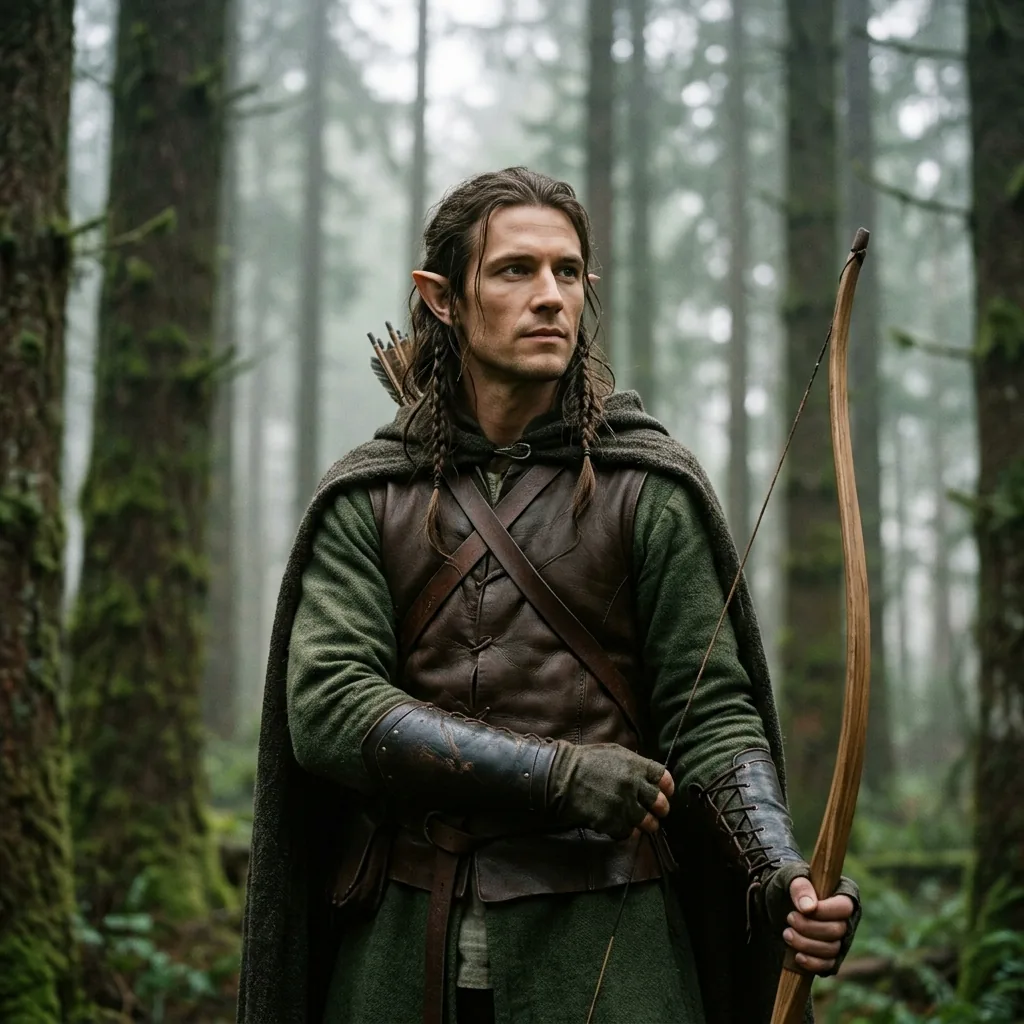
Both models returned an elf in green clothing with a bow in a misty pine forest. They differ in gender presentation and in how the outfit is layered.
| Model | Pricing at 1K (checked October 23, 2026) | What the sample showed | Where it may fit |
|---|---|---|---|
| Nano Banana 2.1 | 2 credits; 3 at 2K, 4 at 4K | A male elf with a compact leather vest, quiver, and bow; face fully visible, pointed ears, practical green-and-brown clothing, plausible bow grip | Designs that lean practical and grounded |
| GPT Image 2.5 | 3 credits; 4 at 2K, 7 at 4K | A female elf with a layered cloak, quiver, and bow; face fully visible, pointed ears, green layered clothing, no obvious distortion at the hands | Designs where you want a more layered, costumed look |
These are the observations from one output per model, not a repeatability test. Pricing is listed on the pricing page and can change. Free access conditions vary, so check that page for the current access details.
Nano Banana 2.1: grounded and straightforward
Nano Banana 2.1, 1K. The same prompt returned a male elf with a compact leather vest, quiver, and bow.
In this run, Nano Banana 2.1 produced a male elf in a compact leather vest with a quiver and bow. The outfit read as simple travel gear, and the face, pointed ears, and forest setting were all present. The hand grip on the bow looked plausible, and there was no text in the image.
In this sample, the silhouette and outfit read clearly, which can help when you are sketching a practical travel design.
GPT Image 2.5: layered and costumed
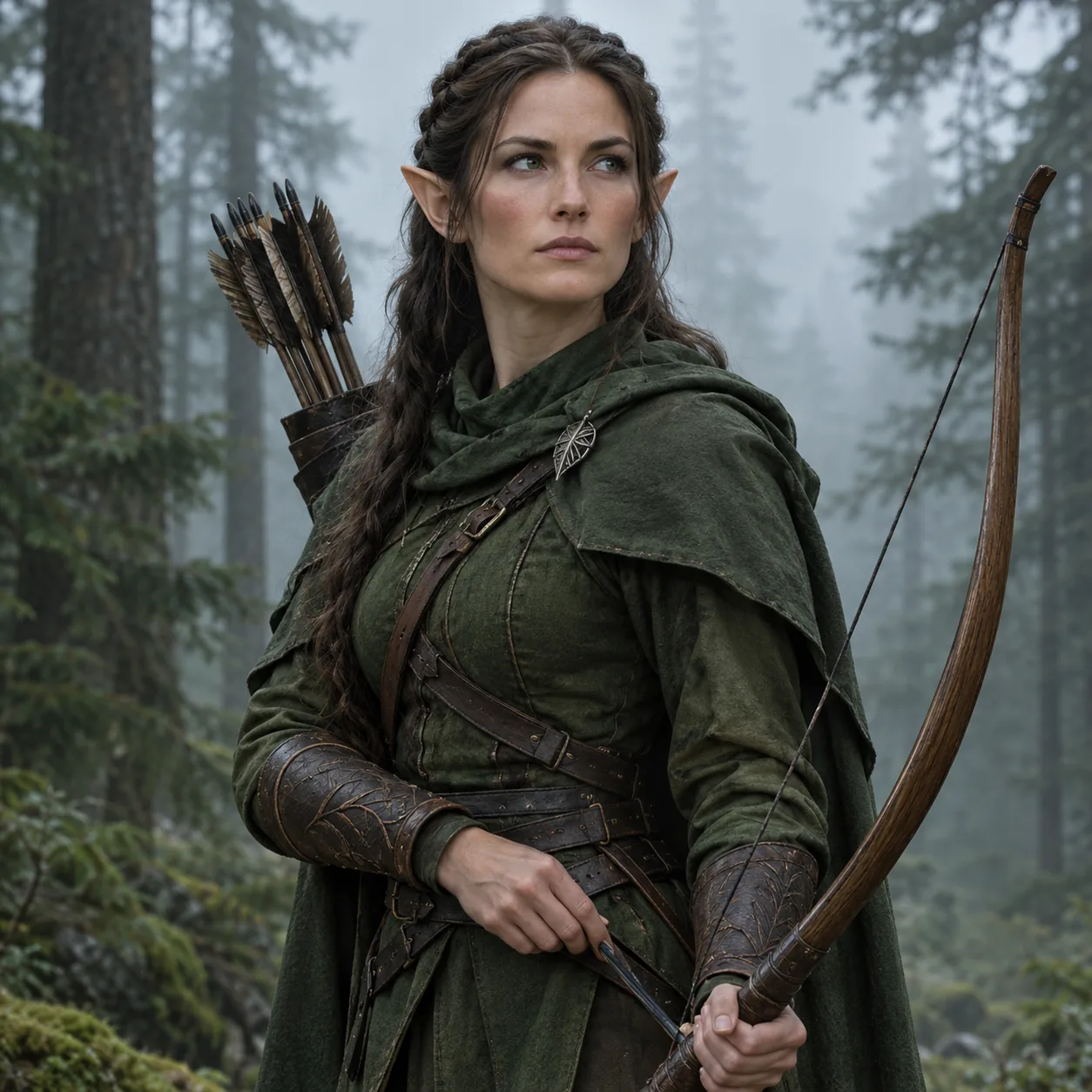
GPT Image 2.5, 1K. The same prompt returned a female elf with a layered cloak, quiver, and bow.
GPT Image 2.5 produced a female elf with a layered cloak, quiver, and bow. The face was fully visible, the ears were pointed, and the clothing came across as more built-up. The hands and bow grip were visible without obvious distortion, and there was no text.
That layering may suit a design that leans toward a more costume-like fantasy look.
The one clear variable: gender was not specified
Because the prompt says "elf ranger" but not male or female, the two models made different choices. That is the single most visible difference between these outputs, and it is a reminder to include any detail you truly need. If gender, hair, or build matters for your character, say so.
How do you specify clothing, pose, and setting?
Good prompts read like a short brief. These habits help whether you use Nano Banana 2.1 or GPT Image 2.5.
- Name the clothing by material and fit. "Practical forest-green travel clothes with leather bracers" gives a model more to work with than "fantasy outfit."
- State the composition. "Full upper-body composition, face clearly visible" keeps the face in the frame instead of cropping it.
- Describe the pose through the prop. "Holding a plain wooden bow" gives the hands something to do.
- Set the light. "Soft overcast forest light" and a muted palette put the character in a specific atmosphere.
- Add exclusions. "No text, no logo" helps keep the image clean.
If you want to carry the same character into other scenes, keep the describing phrases identical and change only the setting or pose. That does not guarantee the same face, but it keeps your intent consistent from prompt to prompt.
What should you compare in a fantasy character image?
When you test your own prompts, look at more than the overall impression.
- Face: Is it fully visible? Do the expression and age read as intended?
- Species details: Are pointed ears, wings, or other traits clear and proportionate?
- Outfit: Do the materials, layers, and colors match your brief?
- Hands and props: Are the fingers and the bow, staff, or weapon plausible?
- Setting and light: Does the background support the character?
- Text: Is the image free of stray words or logos?
- Fit for your use: Does it match the mood of your project, whether that is a game, a story, or a tabletop campaign?
Write down what each model did so you can adjust the prompt. One comparison tells you how two models read one prompt; it does not prove which model is better in general.
Which model should you use?
The honest answer depends on the design. If you want a grounded, practical look, the Nano Banana 2.1 result here leaned that way. If you want a layered, costumed look, the GPT Image 2.5 result leaned that way. GPT Image 2.5 costs more credits at each listed size, so check the current rate before making several variations.
Neither output is evidence that one model will always win for you. The fantasy art generator opens with editable fantasy prompts and optional photo input. You can change the wording and choose another listed model before generating your own version.
Frequently asked questions
Can the same prompt produce different characters each time?
Yes, results can vary between runs and between models. The prompt in this test did not specify gender, and the two models made different choices. Include the details that matter to you if you need a consistent look.
Which model follows a detailed prompt better?
This comparison does not answer that. One output per model shows how each interpreted one prompt; it is not a repeatability test. Run your own character prompt with both models and compare the same features.
Should I use photo input for a fantasy character?
The fantasy page offers optional photo input alongside text prompts. If you use a photo, describe any design details you want the model to include in your prompt.
Can I redesign a character from a movie or game?
It is safer to describe an original character. Name the traits you want, such as species, outfit, and role, instead of asking for a copyrighted character by name.
Where can I see current prices?
The pricing page shows the listed cost per size for each model. Credit prices can change, so check it before you generate.
Build your next character version
Start with the AI Fantasy Art Generator, keep the details you want consistent, and change one feature at a time. For more prompt structure, see Nano Banana prompts and GPT Image 2 prompt examples.